To get pearls, one must dive deep!

Category: Christian Page 160 of 169

Lessons from the Lamb – one for all

God created man to have a relationship with him; Man disobeyed (sinned against) God; This separated man from God; For man’s sin, a price had to be paid! God wanted to punish sin, and not the sinner (man) and so He had to come up with a way;
This is where the lamb comes in –  As a payment for sin, a lamb (that is perfect without any blemish) had to be sacrificed; But this payment (sacrifice) had to be paid every year;

Man continued to sin and sacrifice, sin and sacrifice ad infinitum;

God had to do something and his love for man was so great, that he took the form of the son of Man, and became the Lamb of God;
He came to earth in the form of a baby, named Jesus, which means that He will save His people from their sins; (Note : His people, their sins)
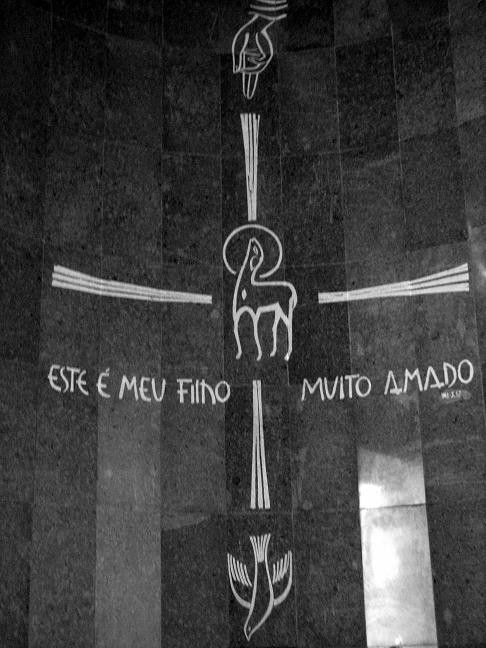
But when John the Baptist, a harbinger prophet, who was pronouncing God’s redemptive plan that will break the circle of sin and sacrifice saw Jesus, He did not call him Jesus, but instead, recognized Jesus to be the Lamb of God (that taketh away all the sins of the world). He said, Behold Jesus (look at Him)  – the Lamb of God (withouth blemish, perfect in all)

This Lamb of God (Jesus) was slain, and his vesture dipped in blood, a blood that purifies you and me from all our sinfulness. Before Jesus died on the cross, where he was crucified so that we (man) may not be punished, he said – Tetelastai, meaning It is finished, paid in full. The payment for sin was complete and no other sacrifice is necessary for man to be restored into the relationship with God. His sacrifice is one for all.

Are you in relationship with this God, who loves you dearly? Do you know the the Lamb of God?

If not, let me reiterate
the cry in the wilderness by a prophet (John the Baptist)  – Look at Jesus, the Lamb of God, who can take away all our sins.
the call of a messianic prophet (Isaiah) –  Come reason with Jesus and he will make us clean (righteous) before God.

John 1:29
29
The next day John seeth Jesus coming unto him, and saith, Behold the Lamb of God, which taketh away the sin of the world.

Isaiah 1:18
18
Come now, and let us reason together, saith the LORD: though your sins be as scarlet, they shall be as white as snow; though they be red like crimson, they shall be as wool.

P.S: The image in this post is a photo I shot in Brazil and the inscription in it is in Portuguese, which states God’s promulgation to mankind, that Jesus (pictured as the Lamb of God) is His Son with whom He (God) is well pleased. Click on the picture for a clearer view.

Lessons from the Kite – kind irrespective

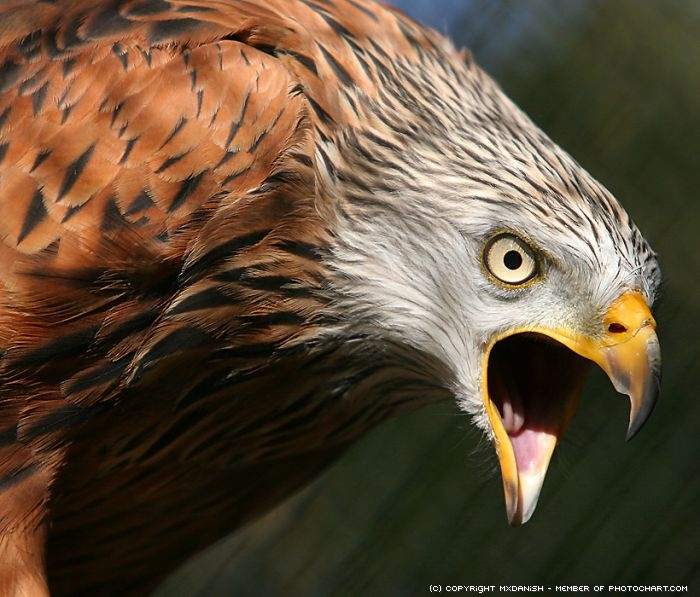
Leviticus 11:14 and Deuteronomy 14:13 both enlists the kite or any of it’s kind as unclean birds, that must not be consumed and in fact abhorred by the people of God.

Again, I don’t believe that this is in any way discriminatory against the kite itself, but it has in the undercurrent an important lesson that we must not overlook. Note how, God says, the kite or any of its kind (paraphrased).
Likewise sin (which is unclean and unholy) and any of its kind is all sin and therefore unclean. Many a times, we console ourselves into thinking that, what we deem as a small sin (such as a white lie etc) is okay because it does not hurt us or it may not hurt anyone else. However, sin or any of its kind (big, small, white, black, yada yada yada) are all to be detested (abhorred) and we must not partake (consume) of it.

Deuteronomy 14:2,3 and 13
2 For thou art an holy people unto the LORD thy God, and the LORD hath chosen thee to be a peculiar people unto himself, above all the nations that are upon the earth.
3 Thou shalt not eat any abominable thing.
13
And the glede, and the kite, and the vulture after his kind,

Lessons from the Jackal – glorify God and lament

Jackals which belong to the dog family are smaller than wolves and larger than foxes.  In the Bible, the jackal is depicted to be an animal that inhabits desolate and abandoned homes that have been subject to divine judgment (Isaiah 34:13). The prophet Isaiah, also records that the jackals (amongst other beasts of the field and birds) will honor God, because of God’s provisions to His chosen people (you and me).

Jackals have a distinctive howl. In fact the prophet Micah, is described in Micah 1:8 as one lamenting (wailing and howling) like a jackal as he pronounces God’s impending judgment and exile on God’s people for their rebellion.

So what can we learn from the jackals?

As prophet Micah expressed, we must have an yearning and our hearts should ache, making us lament and wail and cry (howl like the jackal) for those who have not experienced salvation by accepting Jesus Christ as their Lord and Savior and believing that He is the son of God, who came into the world, died as an atonement for all sin, and who was buried and rose from the dead to be alive today. We must cry (howl like the jackal) for those around us who are rebelling against God, on whom his impending judgment will be poured out. We must cry (howl as the jackal) for those souls that are not saved.

Isaiah 43:20 (NASB)
20 The beasts of the field will glorify Me, The jackals and the ostriches, Because I have given waters in the wilderness And rivers in the desert,To give drink to My chosen people.

Micah 1:8 (NASB)

8 Because of this I must lament and wail, I must go barefoot and naked; I must make a lament like the jackals And a mourning like the ostriches.

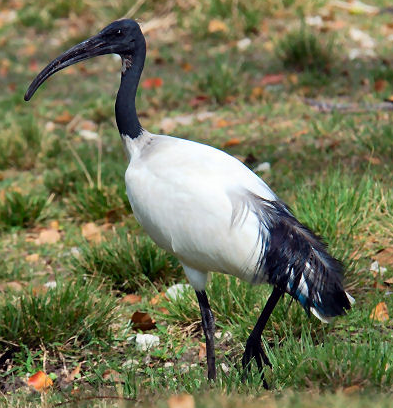
Lessons from the Ibis – unclean and wasteful

The Douay-Rheims Translation of the Bible lists the bird Ibis in two places – Leviticus 11:17 and Isaiah 34:11.

In the first instance, it is mentioned as one of the birds that is deemed ceremonially unclean which needs to be avoided (detested)  by God’s chosen people. In the second instance, it is mentioned as one of the birds that inhabits the wasteland. I believe, the Bible is in no way, discriminatory against certain animals or birds and the Ibis deserves no defamation as may seem on literal review, there are metaphorical revelations that needs further scrutiny.

Anything that is ceremonially unclean (and all sin is) must be avoided (detested) by God’s people (you and me).
Anything that will make us dwell on things that will waste our time, must be identified and avoided as well. The adage, “An idle mind is the devil’s workshop” is true and that is why the Bible counsels us to set our minds on noble things, on things above. (Colossians 3:2; Philippians 4:8)

Point(s) to ponder:

  1. What are the things in our lives that are ceremonially unclean; let us identify them and avoid (detest) them.
  2. What are the things in our lives that drawn us away from things that matter, things of God, and that which makes us waste our time away; let us identify them and act on setting our priorities right.

Colossians 3:2 (NIV)
2 Set your minds on things above, not on earthly (wasteful) things.

Philippians 4:8 (KJV)
8 Finally, brethren, whatsoever things are true, whatsoever things are honest, whatsoever things are just, whatsoever things are pure, whatsoever things are lovely, whatsoever things are of good report; if there be any virtue, and if there be any praise, think on these things.

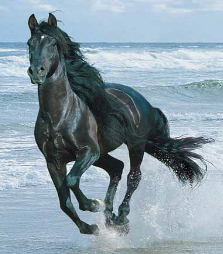
Lessons from the Horse – have understanding

There are many things that can be learned from the horse. The Bible records eludes to the horse to depict strength (Psalm 33:17; Psalm 147:10), speed (Isaiah 30:16; Jeremiah 4:13), sure-footedness (Isaiah 63:13), fearlessness, fierceness, valiant in war and so on.

The Bible also cautions us NOT to be like the horse apropos understanding or the lack thereof as recorded in Psalm 32:9, which states “Be ye not as the horse, or as the mule, which have no understanding: whose mouth must be held in with bit and bridle, lest they come near unto thee.” James 3:3 states”Behold, we put bits in the horses’ mouths, that they may obey us; and we turn about their whole body.”

Proverbs 4:7 states “Wisdom is the principal thing; therefore get wisdom: and with all thy getting get understanding. Let us seek understanding, as the Bible requires us to, even if it costs us all we got. But what is understanding? Proverbs 9:10 has the answer. It states the fear of the LORD is the beginning of wisdom: and the knowledge of the holy is understanding.

Let us seek to know the Holy God and aspire to be holy, just as He is. The first requirement in the Bible is for us to be Holy (Leviticus 19:1-2), and to be Holy, we need to know what it means to be Holy, we need to have knowledge of the holy, we need to have understanding, and not be like the horse (or mule) that lacks it.

Psalms 32:9
9 Be ye not as the horse, or as the mule, which have no understanding: whose mouth must be held in with bit and bridle, lest they come near unto thee.
Proverbs 9:10
10 The fear of the LORD is the beginning of wisdom: and the knowledge of the holy is understanding.

Lessons from the Gazelle – don’t be lazy

The Gazelle (more commonly referred to as Roe in the Bible) is an animal mentioned poetically in the book of Song of Solomon, wherein the man or the woman is likened to the gazelle or its alluring beauty (Song of Solomon 2:9 and 7:3). It is also mentioned metaphorically in other portions of the scriptures.

What can we learn from the gazelle?

We must like the gazelle not allow any sleep to our eyes or slumber to our eyelids, but instead deliver ourselves when we are in trapped in trouble, like the gazelle does from a hunter’s hand (Proverbs 6:4-5). This means that when we caught in the clutches of a situation that troubles us, we must not be lazy, but work hard toward rectifying that situation and delivering ourselves, after committing the efforts to God. Of course, God is in control of everything and he is Almighty, and there are times to Be Still and know that He is God, but then there are times, he wants us to work to be free from the bondage that encumbers us.   Let us (not laze but work to deliver ourselves and) lay aside every encumberance (Hebrews 12:1a). Jesus himself said that we must first try to rectify the situation. “Come to terms quickly with your opponent while you are on the way to court, or your opponent may hand you over to the judge, and the judge to the guard, and you will be thrown into prison.” (Matthew 5:25, International Standard Version).

Proverbs 6:4-5 (NASB)
4 Give no sleep to your eyes, Nor slumber to your eyelids;
5 Deliver yourself like a gazelle from the hunter’s hand And like a bird from the hand of the fowler.

Lessons from the Fox – beware

The Bible has an interesting saying in the book of Song of Solomon chapter 2 verse 15 which cautions the reader to “Be aware and Beware of foxes,  little foxes, that spoil the vineyard“.

When compared to the large predators such as the lions and the bears, foxes, and more particularly little foxes are not the prime focus of defense for a shepherd boy or a vineyard caretaker. The Bible  in its infallible wisdom, cautions us to not be complacent when it comes to these crafty cunning little foxes, that can ruin the vineyard.

While this was originally written with the intent to ensure the sanctity and preservation of a love relationship in marriage (vineyard), informing the people to be aware of the little things that can affect that relationship, it can also be extrapolated to living a holy life as well.While most of us may not ever willingly and openly have other god’s before us, or murder, or bear false testimony in court or covet, taking these vices seriously  etc … we don’t seem to mind when it comes to our work and families (other god’s) taking more precedence and preeminence over God, or hating (murdering in spite) our fellow neighbors, or lying (false testimony) and comparing our state of being (coveting) to that of our friends, co-workers and neighbors. It is these little sins (foxes), that we should be cautious about as they have the same devastating effects as the larger sins (lions and bears).

Be aware and Beware of foxes (sins), little foxes (little sins) that can spoil the vineyard (holy living).

Song of Solomon 2:15 (King James Version)
15 Take us the foxes, the little foxes, that spoil the vines: for our vines have tender grapes.

Lessons from the Eagle – move out, wait and roost on high

Technically, the eagle is a bird, not an animal, but logically it falls under the animal kingdom and so as a Bible animal, it finds it part here.

The Bible records in Proverbs 30:18-19 that the way of the eagle in the air, is one of three things that is wonderful.

What are some of the lessons we can learn from the Eagle?

Deuteronomy 32:11 likens the LORD to be like an eagle stirring her nest, fluttering over her young, spreading abroad her wings, taking the young and bearing them on her wings.
Studies on the life of an eagle have shown that when the eagle builds its nest, it first layers it with sharp rocks, thorns, broken branches and other items that are not considered comfortable. On top of this hard uncomfortable layer, it builds a padding with soft material such as fur and feathers from animals and birds that it has killed. When the eaglets (young eagles) are ready to fly, the eagle stirs its nest exposing the hard uncomfortable layer, and flutters on top of its young. This make the eaglets want to leave the comfort of their nests and they usually fall. The eagle at this time swoops down spreading its wings and bears the young on her wings back to the nest. Eventually the eaglets learn to fly.

Isaiah 40:31 promises that those who wait on the LORD shall renew their strength and mount up with wings as eagles.
Studies have also shown that eagles pluck their old feathers as they age so that new feathers grow in the place of the old. This helps in renewing the eagle’s strength.

Job 39:27 records that the eagle makes its nest (home) on high.
We don’t find eagle nests on tree tops in our neighborhood because the eagle builds its nest on high for safety.

Point(s) to ponder:

  1. When things don’t go your way and you feel uncomfortable, carefully observe. It may be the LORD (as and eagle) stirring your comfort zone. But you can be assured that He will flutters His wings, spread them around you and bear you on top His wings, carrying you over your situation, should you fall/fail? What a wonderful God we serve.
  2. Are you feeling weak and heavy laden? Waiting on God will help us renew our strength. God tell us in Psalm 46:10 to Be Still (Wait on Him)
  3. Where is our home? Is it on high? Is it in heaven or are we merely working toward a vanishing home on earth?  The Bible says in Psalm 91 that those who make the Most High their habitation are safe and that no harm shall befall them. Those whose home (habitation) is heaven are safe. Jesus said, store up your treasures in heaven which is eternal (where there is no decay). Where is our treasure? Where is our home?

Deutoronomy 32:11-12
11 As an eagle stirreth up her nest, fluttereth over her young, spreadeth abroad her wings, taketh them, beareth them on her wings:
12 So the LORD alone did lead him, and there was no strange god with him.

Psalm 91: 9-10
9
Because thou hast made the LORD, which is my refuge, even the most High, thy habitation;
10There shall no evil befall thee, neither shall any plague come nigh thy dwelling.

Lessons for the Donkey – pure and faithful

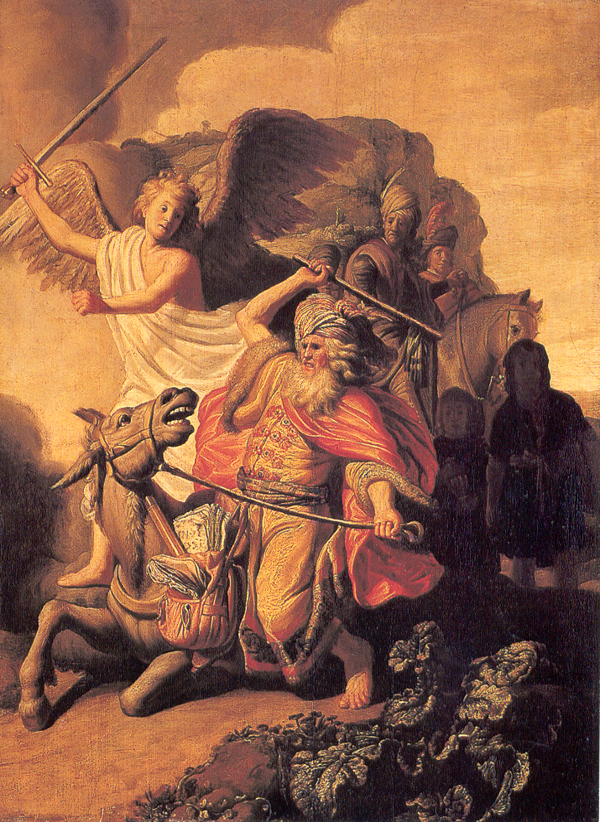
Numbers 22 in the Bible, records a fascinating story of an apostate and greedy man named Balaam that was summoned by Balak, the king of Moab, to ensure victory over the Israelites, the children of God. Balaam saddles his donkey and gets going, but the angel of LORD appears to be seen first only by the donkey, that refuses to proceed. This makes Balaam angry who strikes the donkey, not once, not twice but three times. Many preachers have expanded on the characters, Balaam and Balak, the angel of the LORD etc but there is a lot to be learned from, whom I deem is another main character in the story – the donkey.

What can we learn from the donkey?

  1. The donkey was able to see the angel of God.
    (Verse 23 – Balaam’s donkey saw the angel of the Lord standing in the road with a drawn sword in his hand.)
  2. The donkey could not only speak but also count. Fascinating, isn’t it?
    (Verse 28 Then the Lord gave the donkey the ability to speak. “What have I done to you that deserves your beating me three times?” it asked Balaam.)
  3. The donkey was faithful as a servant.
    (Verse 30 “But I am the same donkey you have ridden all your life,” the donkey answered. “Have I ever done anything like this before?” “No,” Balaam admitted.)
  4. The donkey saved a life.
    (Verses 32 and 33
    32 “Why did you beat your donkey those three times?” the angel of the Lord demanded. “Look, I have come to block your way because you are stubbornly resisting me.
    33
    Three times the donkey saw me and shied away; otherwise, I would certainly have killed you by now and spared the donkey.”)

Point(s) to ponder.

  1. Are we able to see the messengers (angels and people) of God or are we so stubbornly resisting God’s will that we are blind to seeing those around us, who are warning us to live Holy and Blameless lives? Jesus said in Matthew 5:8, Blessed are the pure in heart, for they shall see God (not only be able to see God’s messengers, but God himself)
  2. We may feel many a times like the donkey, foolish and not very wise, weak and not very strong, yet God was able to open the mouth of the donkey to speak and open his mind to count. When we feel foolish and weak, we can take solace in 1 Corinthians 1:27 that states “But God chose the foolish things of the world to shame the wise; God chose the weak things of the world to shame the strong.
  3. The final accolade that all those who believe in Jesus and are called to serve must be to receive the following testament from God – “Well done, my good and faithful servant”. The donkey has subserviently catered for his master faithfully, all his life. Are we doing the same?
  4. Are we saving the lives of those around us by sharing with them the glorious and beautiful story of Salvation and preventing them from proceeding in their way to the second death (spiritual death) in hell.

Numbers 22:21-34 (New Living Translation)
21
So the next morning Balaam got up, saddled his donkey, and started off with the Moabite officials.
22
But God was angry that Balaam was going, so he sent the angel of the Lord to stand in the road to block his way. As Balaam and two servants were riding along,
23
Balaam’s donkey saw the angel of the Lord standing in the road with a drawn sword in his hand. The donkey bolted off the road into a field, but Balaam beat it and turned it back onto the road.
24
Then the angel of the Lord stood at a place where the road narrowed between two vineyard walls.
25
When the donkey saw the angel of the Lord, it tried to squeeze by and crushed Balaam’s foot against the wall. So Balaam beat the donkey again.
26
Then the angel of the Lord moved farther down the road and stood in a place too narrow for the donkey to get by at all.
27
This time when the donkey saw the angel, it lay down under Balaam. In a fit of rage Balaam beat the animal again with his staff.
28
Then the Lord gave the donkey the ability to speak. “What have I done to you that deserves your beating me three times?” it asked Balaam.
29
“You have made me look like a fool!” Balaam shouted. “If I had a sword with me, I would kill you!”
30
“But I am the same donkey you have ridden all your life,” the donkey answered. “Have I ever done anything like this before?” “No,” Balaam admitted.
31
Then the Lord opened Balaam’s eyes, and he saw the angel of the Lord standing in the roadway with a drawn sword in his hand. Balaam bowed his head and fell face down on the ground before him.
32 “Why did you beat your donkey those three times?” the angel of the Lord demanded. “Look, I have come to block your way because you are stubbornly resisting me.
33
Three times the donkey saw me and shied away; otherwise, I would certainly have killed you by now and spared the donkey.”
34 Then Balaam confessed to the angel of the Lord, “I have sinned. I didn’t realize you were standing in the road to block my way. I will return home if you are against my going.”

Lessons from the Caterpillar – unquenchable appetite / metamorphosis

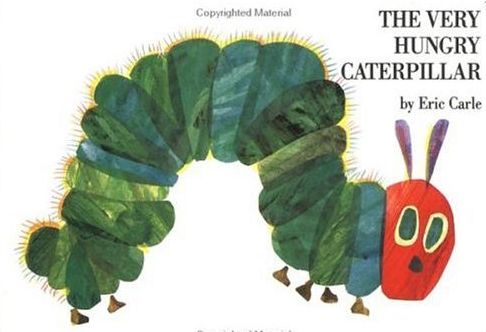
Whenever my wife or I read the children’s book, “The very hungry caterpillar” by Eric Carle, to our three year old, Reuben, it always brings a twinkle in his eyes as he responds, saying “no he was still hungry”, to our question – was he (the caterpillar) full?

The Bible mentions caterpillars (the young of locusts) in Psalm 105 with the same unquenchable appetite that led it to devour all things. This was no doubt execution of God’s punishments Pharaoh and the Egyptians, who were oppressing God’s chosen people and were unwilling to let them go to worship God.

From the caterpillar we can learn to have an unquenchable appetite as well. An unquenchable appetite to do God’s will and to please God. Jesus himself said, “my food is to do that will of the God, who sent him and to complete the work”. We must do likewise as well.

Eric Carle’s book, ends with the hungry caterpillar transforming itself into a beautiful butterfly. In science, this is called  metamorphosis. Christians (followers of Jesus) like caterpillars will metamorphose one day as well. Our earthly ephemeral bodies will be transformed into glorious heavenly bodies.

Point(s) to ponder:

  1. Are you/I hungry with a voracious appetite to do God’s will?
  2. Are you/I sure that you will transformed one day to have heavenly bodies and if so are you looking forward to your/mine metamorphosis?

Psalm 105: 34-35
34
He spake, and the locusts came, and caterpillers, and that without number,
35
And did eat up all the herbs in their land, and devoured the fruit of their ground.

John 4: 34
34 Jesus saith unto them, My meat (food) is to do the will of him that sent me, and to finish his work.

1 Corinthians 15:40, 44b,49, 51, 52 and 53
40
There are also celestial bodies, and bodies terrestrial: but the glory of the celestial is one, and the glory of the terrestrial is another.
44b
There is a natural body, and there is a spiritual body.
49 And as we have borne the image of the earthy, we shall also bear the image of the heavenly.
51 Behold, I shew you a mystery; We shall not all sleep, but we shall all be changed,
52
In a moment, in the twinkling of an eye, at the last trump: for the trumpet shall sound, and the dead shall be raised incorruptible, and we shall be changed.
53
For this corruptible must put on incorruption, and this mortal must put on immortality.

Page 160 of 169

Powered by WordPress & Theme by Anders Norén